
How Many Restrooms Does a Race Course Need?
Start with the start line and work backward from there. Most races cluster the bulk of their standard porta potty rental units at the corral, then space smaller groups every 2 to 3 miles along the route. A half marathon through Spring Hill with 800 runners typically needs a dozen or more units at the start, with 2 to 4 at each aid station beyond that. This lines up with the general sanitation guidance in OSHA 1926.51(c), which sets ratios for worker counts and translates reasonably to spectator and runner density when race organizers plan facilities. If you are unsure how the math scales for your specific course, our how many porta potties do I need guide walks through it step by step. Do not forget the finish line chute, where fatigued runners and family members create a second surge of demand almost as large as the start. A finish-area cluster of 6 to 10 standard porta potty rental units keeps lines from backing into the chute itself. For races with strict accessibility requirements, ADA Standards section 213.2 calls for at least 5 percent of clustered single-user units to be accessible, with a minimum of one, so build that into your unit count from the start rather than adding it as an afterthought.
What Else Does Race Day Setup Need Besides Toilets?
Toilets are half the picture. Timing tents, medical stations and finish-line score boards all run on power, and most race organizers underestimate how much cable and generator capacity that takes. A temporary power pole at the finish area handles lighting rigs and PA systems without tripping breakers mid-race. If you are asking how to brace a temporary power pole on grass or gravel near a finish line, the short answer is a wide base plate anchored with guy lines or ballast blocks, set well clear of the runner corridor and any vehicle path. Loose poles near a crowded finish chute are a hazard nobody wants to explain afterward. Beyond power, most courses need temporary fence rental to hold spectators back from the route, and a handwashing station rental or two near food and water tables. Aid stations handling sports drinks and gel packets generate sticky waste fast, so a roll-off dumpster rental staged near the finish festival area saves volunteers from hauling trash bags across the venue by hand. If your race runs early morning or into dusk, ask about light tower rental for the staging and breakdown hours when natural light runs out.
When Should Race Restrooms Be Delivered and Picked Up?
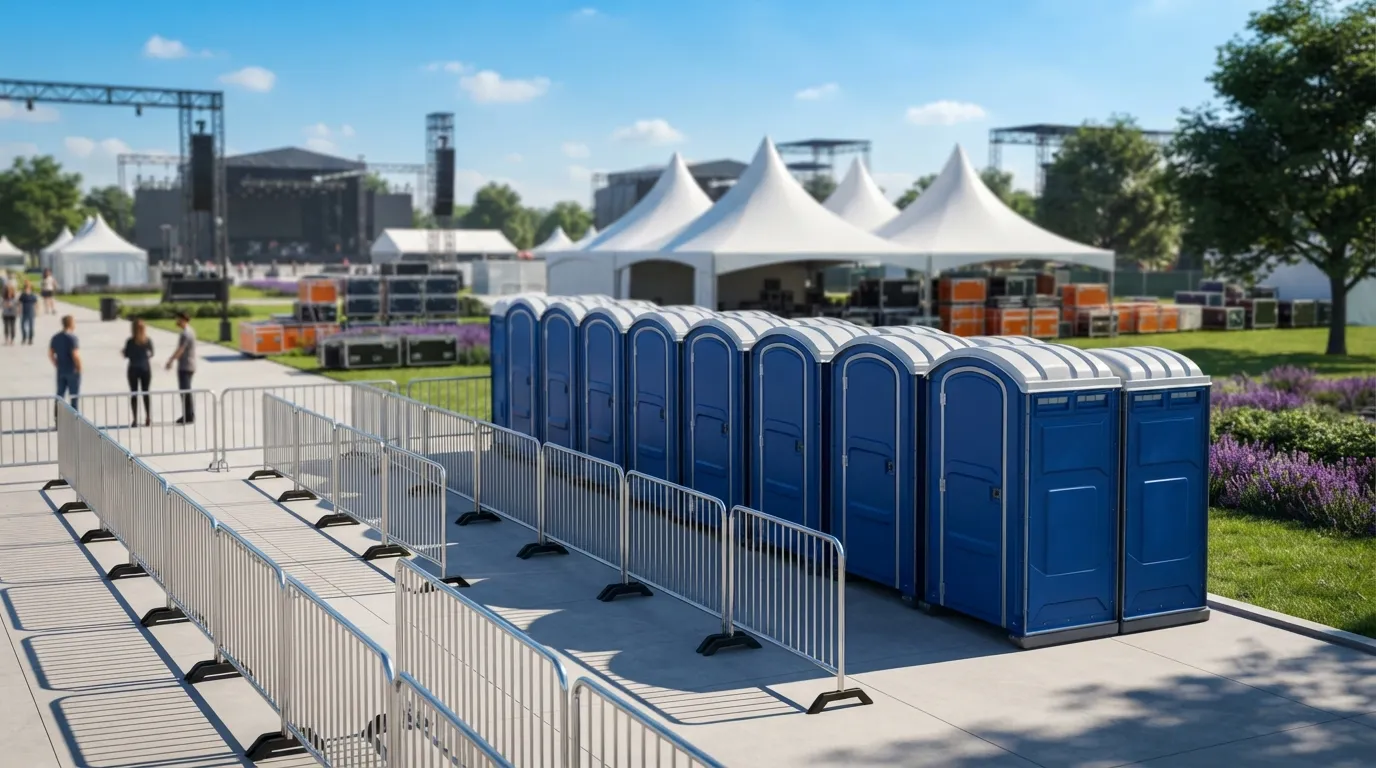
Delivery should land the afternoon before race morning, giving volunteers time to walk the course and confirm placement before runners arrive. A weekend race rental runs in the range most organizers already budget for, and Spring Hill Porta Pros times delivery around road closures so trucks are not fighting course marshals for access. Pickup usually happens within a few hours of the last runner crossing, though large festivals with vendor booths often keep units through the evening. If your race sits close to another town on the circuit, that is worth flagging early. Timber Pines is 7.4 miles west of Spring Hill and High Point sits 8.1 miles north, both close enough that a single delivery run can serve back-to-back weekend events without a second mobilization fee. Races drawing from Brooksville, 10.2 miles east, or Masaryktown, 9.2 miles southeast, often want restrooms held on standby in case runner counts jump late. For larger festival-style races with VIP tents or sponsor hospitality areas, a restroom trailer rental or a luxury restroom trailer gives sponsors something nicer than a standard stall. Need a quick reference for what a full race weekend runs? Check our porta potty rental cost breakdown or request a request a quote with your runner count and course map attached.
| unit | duration | typical price |
|---|---|---|
| standard | weekend | $250 |
| standard | event | $400 |
| ada | weekend | $240 |
| trailer | weekend | $2,000 |
| trailer | event | $3,500 |
How far in advance should I book race restrooms?
Book 4 to 6 weeks out for anything drawing more than a few hundred runners, since weekend inventory moves fast during race season. Smaller local fun runs can often book with two weeks notice. See our emergency porta potty rental page if your event date moved and you are short on time.
Do I need ADA-accessible units on a race course?
Yes, if you are clustering portable toilets at any point along the route. ADA Standards section 213.2 requires at least 5 percent of a cluster to be accessible, never fewer than one unit, so plan that into your start and finish counts.
Can restrooms be placed along the actual race route, not just start and finish?
Yes, and most longer courses need them. Aid stations past mile 3 typically get 2 to 4 units each, positioned just off the running lane so they do not interfere with temporary fence rental barriers or crowd control barriers.
What is the difference between a race rental and a regular event rental?
Race rentals need faster turnaround for runner flow and often require power for timing equipment near the finish, unlike a typical event restroom rental with steady foot traffic. Course spacing and aid station clusters are the main planning difference.
Should we budget for a dumpster on race day?
Yes, especially with food vendors or a post-race festival. A roll-off dumpster rental staged near vendor booths keeps trash from piling up around your portable restroom rental units by mid-afternoon.
Next step
Get a delivery date
Tell us the address, the dates and the headcount. We size the order and confirm the route.