
How many restrooms does a county fair need?
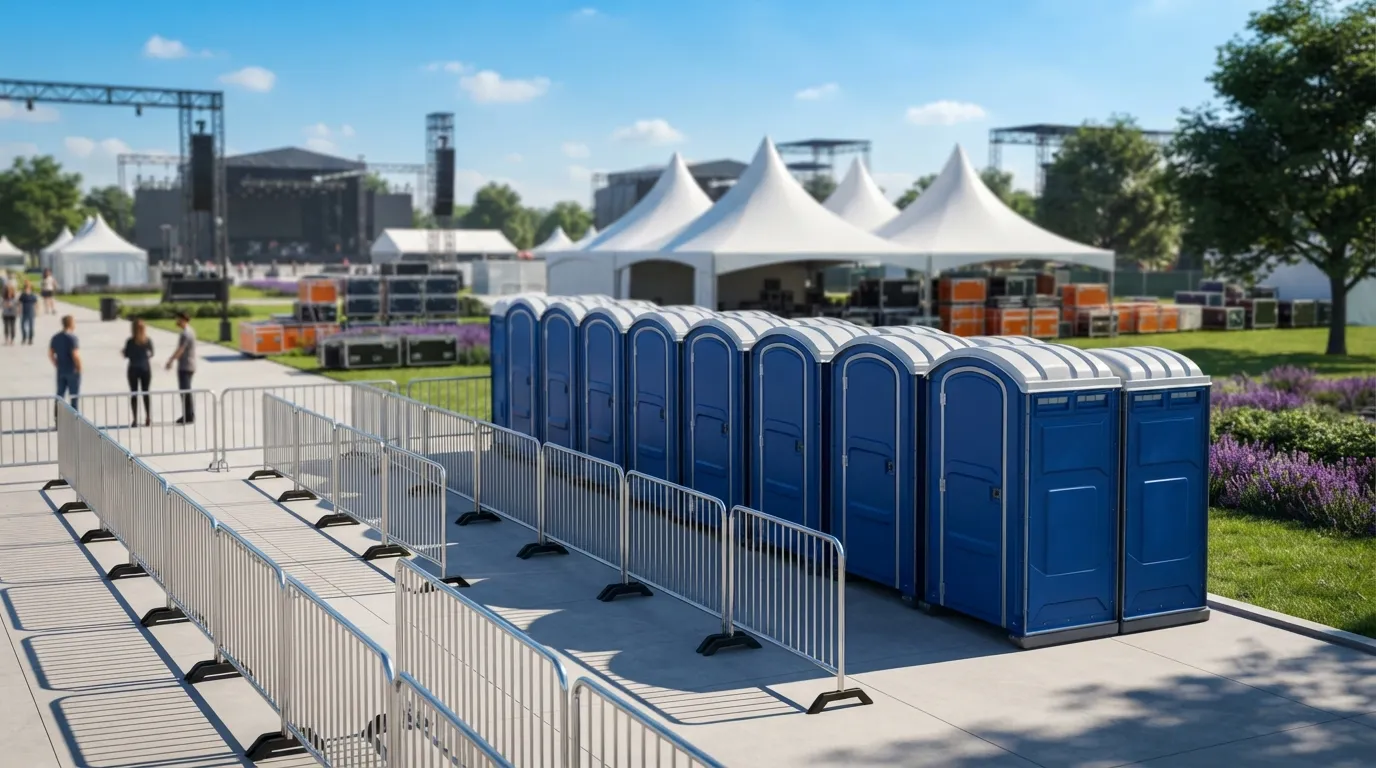
Fair crowds spike hard around gate openings, grandstand shows and fireworks, so you plan for the busiest hour, not the daily average. OSHA 1926.51(c) sets construction-site ratios as a baseline: 1 toilet for 20 workers or fewer, then 1 toilet and 1 urinal per 40 workers as the count climbs. Fair attendance behaves differently since people move in waves, but that ratio is still a useful floor for staff and vendor crews working the grounds all day. For general attendee counts, most fair organizers in Spring Hill work from attendance projections rather than a fixed OSHA formula, and our porta potty rental checklist walks through how to translate a gate estimate into a unit count. If you are still scoping numbers, the how many porta potties do I need guide covers the math in more depth. A standard unit holds a 60 to 70 gallon tank and stands about 92 inches tall, and clustering several near the midway keeps lines short during peak hours. We typically recommend spacing them near food courts, grandstands and parking areas rather than one central bank, since a single cluster forces long walks and longer lines. For fairs pulling from Brooksville, 10.2 miles east, or Masaryktown, 9.2 miles southeast, we factor drive time into delivery and mid-event service windows so units get serviced without gaps during operating hours.
What restroom options work best for a multi-day fair?
Multi-day fairs need a mix: standard units for volume, ADA accessible units for compliance, and often a restroom trailer for VIP areas, sponsor tents or staff use. ADA Standards section 213.2 requires that where single-user units are clustered, at least 5 percent be accessible, with a minimum of one unit regardless of cluster size. That means even a modest bank of ten standard units needs at least one accessible unit meeting ADA Standards section 304.3.1's 60 inch turning circle and the 32 inch clear door opening under section 404.2.3. For fairs with a grandstand or main stage, a 4 stall restroom trailer or 8 stall restroom trailer handles higher traffic with less waiting than a row of standalone units, and a deluxe flushable porta potty is a middle option for sponsor areas that want something nicer than standard without full trailer cost. Handwashing matters too: 29 CFR 1910.141(d)(2) requires soap and towels or a hand-drying device at washing stations, and hand sanitizer alone does not satisfy that. Food vendor rows should pair handwashing station rental units directly with cooking areas rather than relying on restroom sinks alone. If the fairgrounds sit near heavy foot traffic from High Point, 8.1 miles north, or Timber Pines, 7.4 miles west, extra handwash stations near entry gates cut down on cross-contamination during long service days.
How much do county fair restrooms cost in Spring Hill?
Pricing depends on unit type, quantity and how many days the fair runs. Standard units rented for an event day fall in a wide band because larger fairs need volume pricing, while a single weekend rental for a smaller gathering costs less overall.
| unit | duration | typical price |
|---|---|---|
| standard | event | $400 |
| standard | weekend | $250 |
| ada | weekend | $240 |
| deluxe | week | $250 |
| trailer | event | $3,500 |
Delivery fees for multi-day events typically run in the $100 to $150 range per day depending on distance and access, and setup crews need about 60 feet of straight clearance behind the delivery truck for roll-off and trailer equipment. If your fair site has tight access roads or grass that gets soft after rain, mention it when booking so the crew can plan the route. For general planning on cost ranges outside fair season, our porta potty rental cost and porta potty rental per day pages break down standard event pricing further. Fairs running multiple weekends sometimes do better with a monthly porta potty rental arrangement instead of booking each weekend separately.
Do fairgrounds need a permit for portable restrooms?
Placement in the public right of way needs confirming with the city, and permit rules vary by exact site and layout. Check our porta potty permit requirements page before finalizing placement, and loop in fairgrounds management early since venue rules sometimes add their own requirements beyond the city's.
How often are units serviced during a multi-day fair?
Multi-day fairs typically need daily servicing, not the standard weekly interval used for construction sites. High foot traffic empties tanks faster, so we schedule servicing around gate hours to avoid disrupting attendees. See how often are porta potties cleaned for the baseline schedule we adjust from.
Can we get ADA units delivered separately from standard units?
Yes, ADA units can be delivered and placed as their own cluster or mixed into the main restroom bank. ADA Standards section 403.5.1 requires a 36 inch clear route to each unit, so placement matters as much as count. Our ADA restroom requirements page covers layout details.
Do we need handwashing stations separate from the restrooms?
Yes, especially near food vendors. Restroom sinks alone won't cover cooking areas, and 29 CFR 1910.141(d)(2) requires soap and towels at washing stations. Pair portable sink rental units with each food row for faster turnover and fewer bottlenecks near restroom trailers.
What if attendance is higher than expected on peak days?
Call ahead and we can add units same-day if inventory allows, though weekend availability is tighter than weekday. Our emergency porta potty rental service covers last-minute additions for fairs seeing unexpected crowd surges beyond projections.
Next step
Get a delivery date
Tell us the address, the dates and the headcount. We size the order and confirm the route.