What makes a porta potty ADA accessible?
An ADA unit is bigger and built to different clearances than a standard rental. Spring Hill Porta Pros builds every ADA accessible porta potty to meet ADA Standards 404.2.3, which sets a minimum clear door opening of 32 inches, and ADA Standards 403.5.1, which requires 36 inches of clear route width to reach the unit. Inside, there has to be room for a 60 inch turning circle under ADA Standards 304.3.1, so the footprint is noticeably larger than a standard porta potty rental. Grab bars, a raised seat height, and a wider interior all come standard. Floor surfaces have to be stable, firm, and slip resistant under ADA Standards 302.1, which matters on the sandy or uneven ground you get around Spring Hill construction sites. If you're planning a cluster of units for an event or job, our porta potty placement guide walks through where the accessible unit needs to sit relative to the rest.
How many ADA units do I need for my event or job site?
Start with ADA Standards 213.2: one accessible unit for every cluster of standard toilets, minimum one, and 5 percent of the total once you scale up. A wedding with six units still only needs one ADA toilet under that math, but a festival running twenty units needs at least one for every batch of twenty. Run your headcount through how many porta potties do I need first, then add the ADA minimum on top. Construction crews layering in OSHA requirements should also check OSHA portable toilet requirements, since OSHA 1926.51(c)(1) sets its own ratio: one toilet per 20 workers or fewer, then one toilet and one urinal per 40 workers once you pass that threshold, scaling to one per 50 at 200 or more. Neither standard replaces the other. You're meeting both at once. If you're renting for a wedding in Spring Hill, our wedding restroom rental page has a faster way to size the whole layout.
Where should an ADA unit be placed on site?
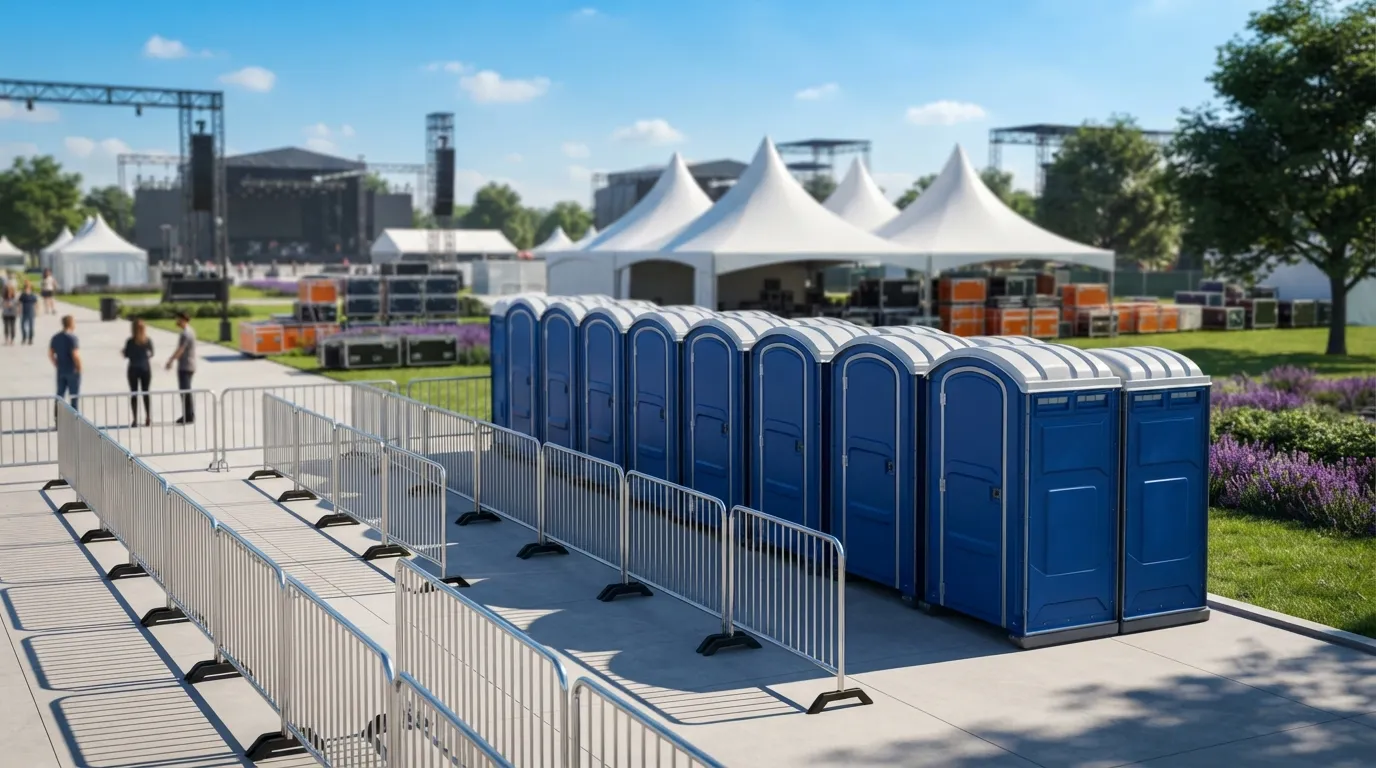
Placement matters as much as the unit itself. The path to an ADA toilet has to stay a stable, firm, 36 inch clear route the whole way, per ADA Standards 403.5.1, with no gravel ruts or event cabling crossing it. Reach ranges inside the unit follow ADA Standards 308.2.1, capping the forward reach at 48 inches high and 15 inches low, so dispensers and latches can't be mounted too far up. Door hardware and any flush controls need to meet ADA Standards 309.4: operable with one hand, no tight grasping or twisting, and no more than 5 pounds of force to use. If your site has a ramp leading to the unit, ADA Standards 405.2 caps the running slope at 1:12. Spring Hill sites near Timber Pines, about 7.4 miles west, or Brooksville, 10.2 miles east, often deal with sloped lots, so we walk the ground before drop-off. See our full porta potty rental checklist for a pre-delivery walk-through, and check porta potty permit requirements if the unit sits near a public sidewalk.
Do I need ADA restrooms for a small residential job?
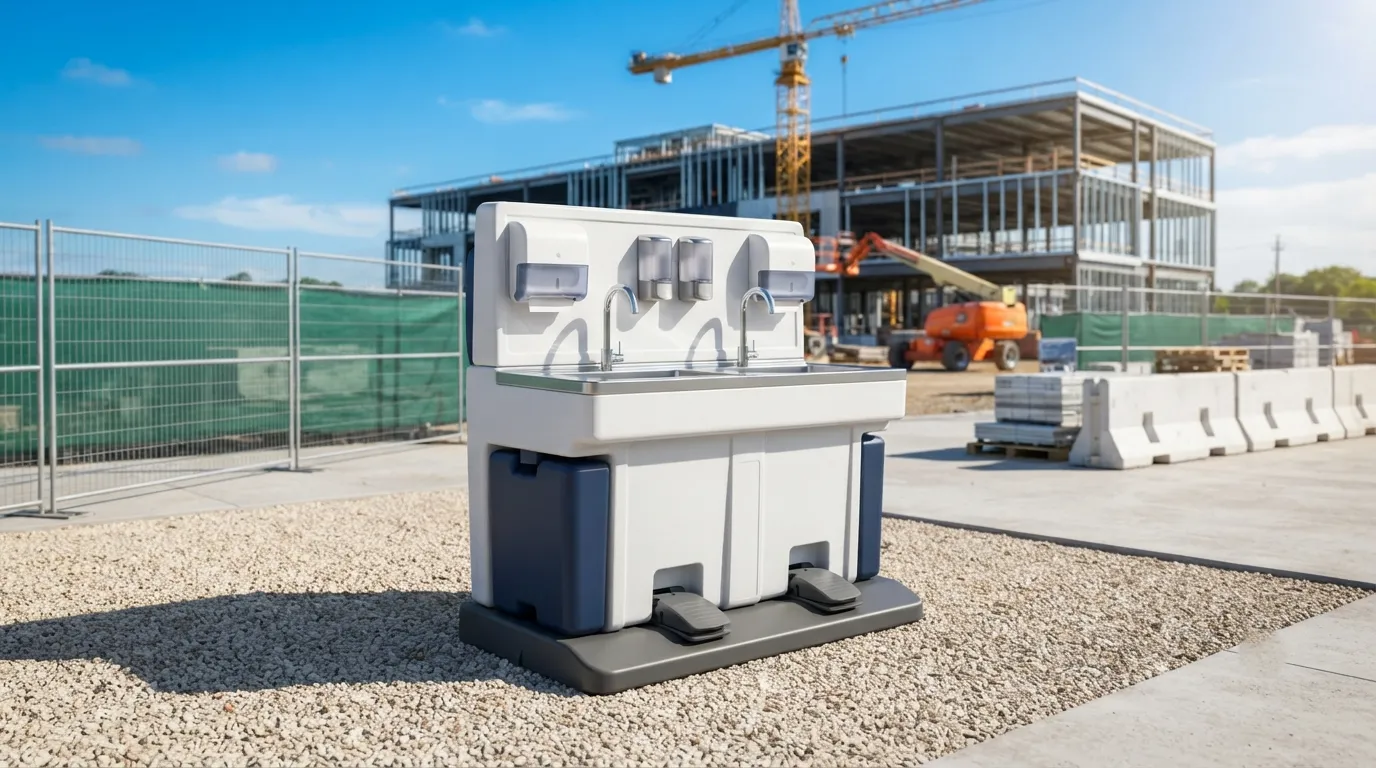
Not always, but check anyway. A homeowner running a short driveway renovation with one or two workers may not trigger ADA cluster rules the way a public event does, but OSHA 1926.51(c)(1) still governs worker sanitation regardless of job size once you've got employees on site. If you're doing a home renovation porta potty rental and expect visiting family, subcontractors, or inspectors who may need accessible facilities, it's worth adding one ADA unit rather than assuming it's optional. Rental costs run close either way. Below is what Spring Hill Porta Pros customers typically pay for ADA and standard units side by side, based on measured pricing across our service area:
| unit | day | week |
|---|---|---|
| ADA accessible | $200 - $400 | $240 - $400 |
| Standard | $100 - $350 | $130 - $500 |
Delivery runs separately, typically $100 to $500 for a single day depending on distance and site access. For a full breakdown, see porta potty rental cost or porta potty rental per day. Longer jobs often do better on a monthly porta potty rental instead of renewing weekly.
Does an ADA unit cost more than a standard one?
Sometimes, but not always, since the bands overlap. ADA day rates run $200 to $400 versus $100 to $350 for standard, and weekly ADA rentals track close to standard weekly rates once you add up multi-day use. Ask Spring Hill Porta Pros for a quote against your actual unit count and duration rather than assuming a flat markup.
Can one ADA unit serve multiple standard toilets?
Yes, that's the standard. ADA Standards 213.2 requires just one accessible unit per cluster of standard units, minimum one, scaling to 5 percent as the cluster grows. You don't need a 1-to-1 ratio, just correct proportioning as your headcount rises.
Is an ADA porta potty required for weddings and private events?
It depends on venue rules and guest needs, but most planners add one regardless. If any guest, vendor, or family member uses a mobility device, having an accessible unit avoids a scramble. Check our event restroom rental page for full event sizing guidance.
What's the difference between ADA and deluxe flushable units?
ADA units meet accessibility clearances; deluxe units add flushing and sink features but aren't necessarily ADA sized. Some rentals combine both. Compare specs on deluxe flushable porta potty before booking if you need both features together.
Do construction sites in Spring Hill need ADA units by law?
ADA cluster rules apply once you're providing portable toilets to the public or mixed workforce; OSHA 1926.51(c)(1) sets worker ratios separately. Spring Hill Porta Pros can help sort which rule applies to your construction site services job before delivery day.
Next step
Get a delivery date
Tell us the address, the dates and the headcount. We size the order and confirm the route.