
What Does Field Sanitation Law Require on a Farm?
OSHA 1928.110 sets the baseline for agricultural hand-labor operations: potable water, toilet facilities and handwashing, at a ratio of one facility per 20 employees, and none of it farther than a quarter mile from where people are working. That is different from a construction site, which falls under OSHA portable toilet requirements at 1926.51(c) instead. If your operation mixes field labor with a packing shed or equipment yard, you may be running both standards at once, and it is worth working through how many porta potties do I need before the crew shows up, or reading our porta potty placement guide first.
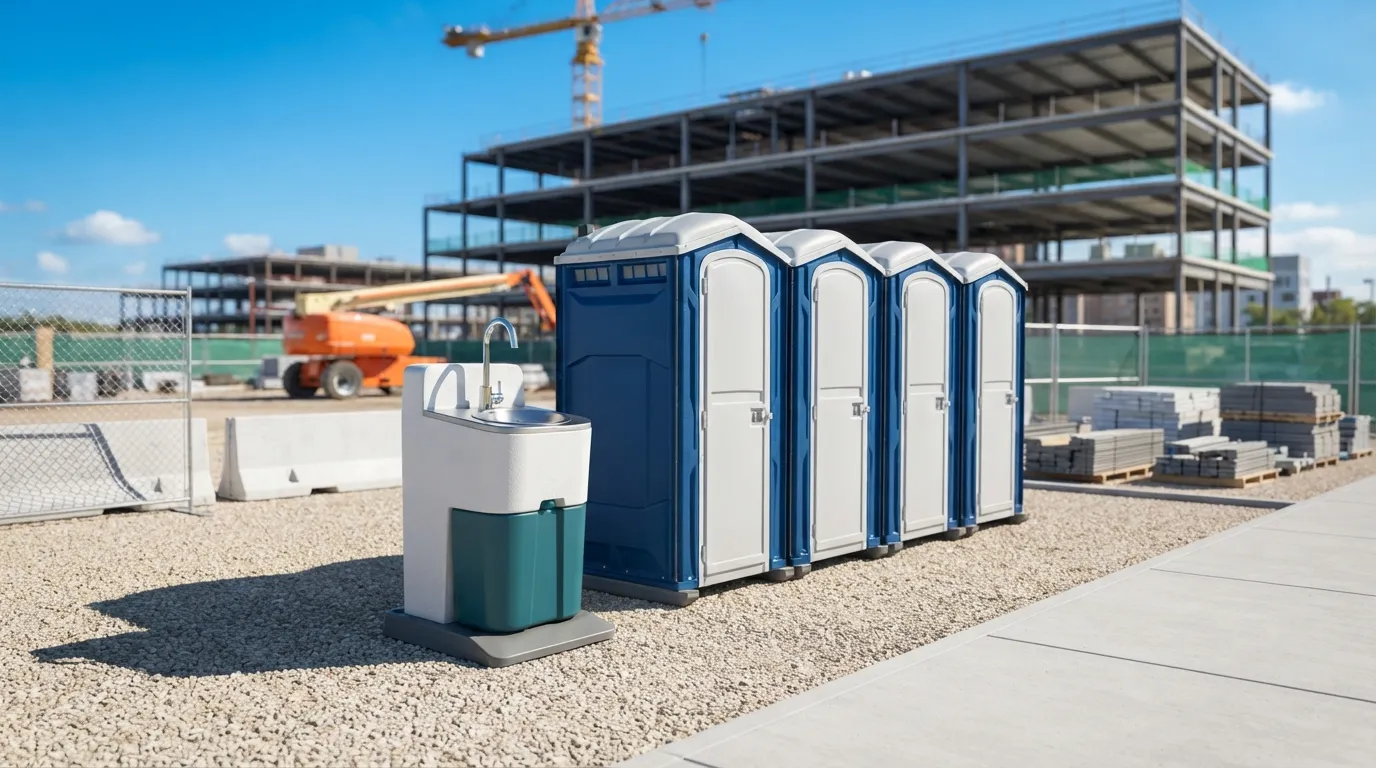
Water has to be potable under 1926.51(a)(1) too, so a jug from the tank on the tractor does not count on its own. We pair standard porta potty rental units with a handwashing station rental or a portable sink rental so both boxes get checked at once. Each standard unit carries a 60 to 70 gallon holding tank and stands about 92 inches tall, which handles a full crew day without a mid-shift pump-out. If you are spraying anything, herbicide or pesticide included, that is the specific case where washing facilities are required under 1926.51(f)(1), not just a rinse bucket by the truck, and a hand sanitizer station rental is not a substitute for that requirement.
Spring Hill fields run long acreage with rough access roads, so we scout drop points before delivery day. Units near Brooksville, 10.2 miles east, or out toward Masaryktown, 9.2 miles southeast, still fall inside a standard delivery run for us, the same zone covered on our service areas page.
How Many Units Does a Farm or Ranch Need?
A 20-person crew needs at least one toilet facility under 1928.110, and every additional 20 workers needs another. Most Spring Hill operations we serve run two to six units depending on crew size and how spread out the fields are. Move units with the crew if the quarter-mile walk rule would otherwise be broken by a harvest that shifts location week to week, and see our main porta potty rental page for how we handle mid-season relocations.
| unit | duration | typical price |
|---|---|---|
| standard | day | $150 |
| standard | week | $200 |
| standard | month | $200 |
Monthly rentals make the most sense for a season-long crew, and a monthly porta potty rental works out cheaper per day than booking daily runs across a harvest. Short jobs, like a two-day fence-building push or a one-off cattle sort, fit better under porta potty rental per day pricing. For a full breakdown of what drives the number up or down, porta potty rental cost covers delivery, service frequency and unit type side by side.
Larger operations with a packing crew or a farm store open to the public should also look at an ADA accessible porta potty. ADA Standards 213.2 requires at least one accessible unit in any cluster of single-user units, even out on a rural site, and that unit needs a 60 inch turning circle inside per 304.3.1, a requirement covered further on our ADA restroom requirements page.
Why Do Farms Choose Delivered Restrooms Over a Fixed Building?
A delivered restroom moves with the work, and a fixed building does not. Field crews shift from block to block through a season, and a septic-tied bathroom back at the barn does nothing for a picking crew a half mile out. Delivered units also skip the plumbing and permitting delay of a permanent structure, which matters when a harvest window is short, and for bigger operations a restroom trailer rental can cover a packing crew without any plumbing at all.
Farms with a house or a rental cottage on the property should also keep the septic pumping service on schedule. A residential septic tank is typically pumped every 3 to 5 years depending on tank size and household size, and a farm running extra labor housing or a bunkhouse puts more load on that tank than the schedule assumes. If you run a roadside stand with a fryer or wash station, check grease trap pumping too. Grease interceptors need pumping once fats, oils, grease and solids hit 25 percent of the liquid depth, and produce operations hit that mark faster than most people expect.
Spring Hill farms dealing with a sudden well failure or septic backup can call our emergency septic service line rather than waiting out a normal service window. We also stock temporary fence rental for livestock control and event-adjacent farm sites, and a roll-off dumpster rental for cleanup after a harvest or renovation, plus storage container rental for tools and feed between seasons. Operations near High Point, 8.1 miles north, or Timber Pines, 7.4 miles west, fall inside our normal Spring Hill delivery zone without an extra trip charge, so request a quote with your address and we will confirm.
How often do farm restrooms get serviced?
The baseline under ANSI/PSAI Z4.3 is one service visit per week for up to 10 users across a 40 hour week. Field crews larger than that, or working longer days, usually need two visits weekly. We set the schedule around your actual crew size, not a flat default.
Can I put a restroom right next to the field?
Yes, as long as it is within OSHA's quarter mile walk limit under 1928.110. We walk the property with you and pick spots with stable ground and truck access, since a 60 to 70 gallon tank unit still needs a level pad to sit right.
Do I need handwashing separate from the toilet?
Yes. Toilets and handwashing are two separate requirements under 1928.110, and 29 CFR 1910.141(d)(2) requires soap and towels, not sanitizer alone. We pair every toilet order with a proper handwashing station rather than assuming one covers the other.
What if my farm also runs a retail stand or event?
That likely shifts you toward ADA obligations under 213.2, since the public is now using the units. We can mix standard field units with one ADA-compliant unit to cover both the crew and your customers.
Can you deliver to a rough field access road?
In most cases, yes. We check ground conditions before delivery day and will discuss alternate placement if the road is too soft or narrow for the truck, especially during Florida's wetter months.
Next step
Get a delivery date
Tell us the address, the dates and the headcount. We size the order and confirm the route.